What to ask before you sign an HOA snow contract
Seven questions that make snow bids comparable — trigger depth, what's included, where the snow goes, and how your board proves service was performed.
You've got three bids on the table and they all say about the same thing. Snow removal, seasonal, a number at the bottom. One's a little cheaper. Somebody on the board is going to say "let's go with the cheaper one," and unless someone can explain what's different about the other two, that's what happens.
The problem isn't that boards pick badly. It's that most snow bids don't contain enough information to pick well.
Here's the short version: a snow contract is only comparable if you know four things — what sends the trucks out, what's included versus extra, where the snow goes when the lot fills up, and how you'll know the work happened. Most bids answer one of those. Some answer none.
Below are the questions that get you the rest. You can ask them of anyone bidding, including us.
What's the trigger depth, and is it in writing?
The trigger is the amount of snow that automatically sends trucks to your property. No phone call, no judgment call at 5am.
Most seasonal contracts use three inches. Drive lanes and parking areas are often set lower, because they have to stay open and safe for a lot of people rather than one family.
If a contractor can't tell you the number, there isn't one — which means plowing happens when they get to it. That's the single biggest difference between two bids that look identical on price, and it almost never appears in either.
Ask for it in writing. Ours gets set at the site walk and written into the agreement, which is part of how HOA and association contracts are structured.
What's included, and what's an add-on?
This is where cheap bids get expensive.
Plowing the drive lanes, parking areas, and entries is usually the contract. Everything else — hand-clearing sidewalks and steps, de-icing icy grades, roof snow, ice-dam work, hauling snow off the property — is usually extra, whether or not the bid says so.
A bid that reads "snow removal — $X" and nothing else isn't a lower price. It's the same price with the extras hidden until February.
Ask for the scope by area: drive lanes, guest parking, entries, mailbox and dumpster pads, sidewalks. For each one, is it in the season price or billed separately? Get the add-on rates up front, before you need them.
Where does the snow go — and what happens when that runs out?
This is the question nobody asks, and in a condo or townhome property it's the one that costs you.
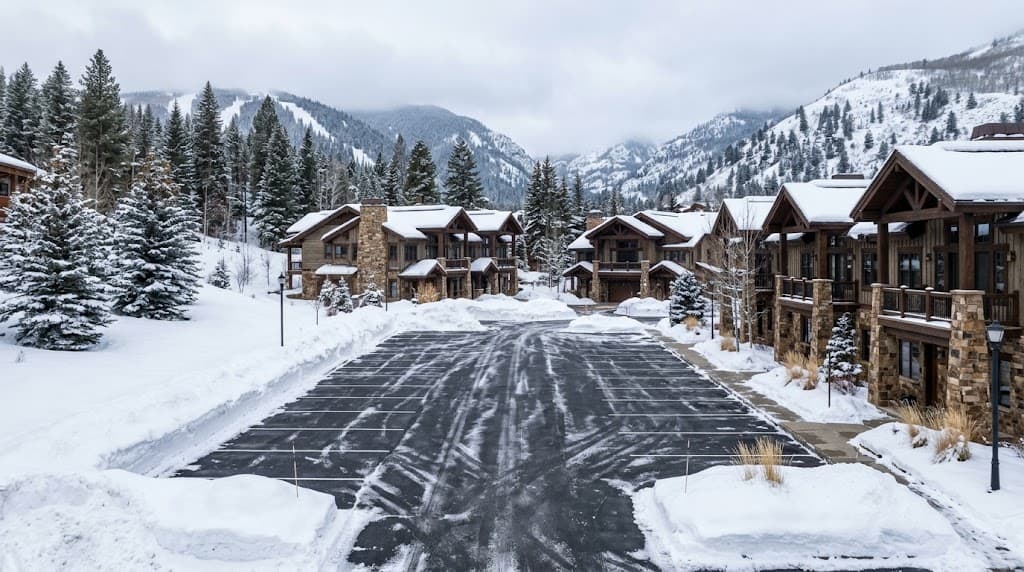
Snow doesn't leave. It gets pushed somewhere, and in a dense lot there isn't much somewhere. Push it into the wrong corner in December and by February your association has lost four parking spaces to its own snow pile. Owners notice. The board hears about it.
A contractor who has walked your property should be able to tell you where the piles go before the season starts, and what the plan is when those areas fill. Pushback and haul-off are normal add-ons — but they should be priced and agreed in advance, not quoted in a panic in the middle of a big winter.
If the answer is "we'll figure it out," that's the answer.
How will our board know the work was done?
Here's the one that matters most and gets asked least.
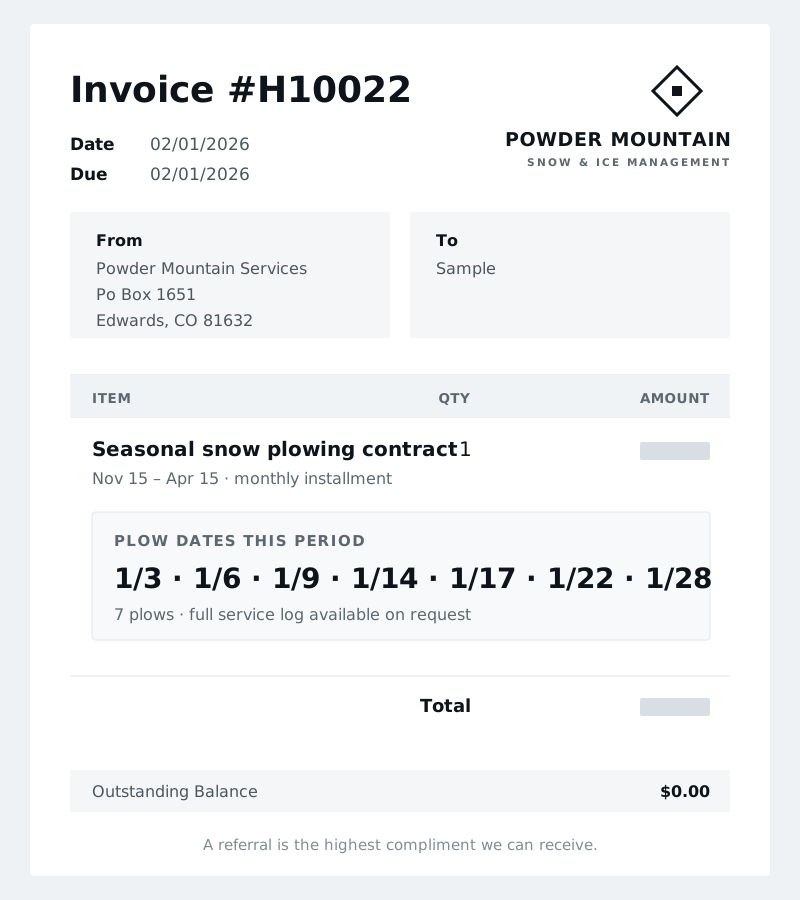
Sometime in January an owner is going to email the board and say nobody plowed during that storm on the 14th. Or someone slips on a walkway and the association needs to establish what was cleared and when.
If your contractor can't produce dates, your board has nothing.
Ask what the record looks like. Ours is simple: every plow date is itemized on the monthly invoice, and the full service log is available any time you ask. That means the answer to "did they come out on the 14th" is already sitting in your treasurer's inbox.
You don't need anything elaborate. You need dates, in writing, that existed before the question came up.
Can we see a certificate of insurance before the season?
A contractor should carry general liability, and your board should have the certificate on file before the first storm — not after an incident.
Ask for it up front. Ask whether the association can be named as certificate holder. If getting a COI takes three weeks and two reminders in October, think about how that same responsiveness looks at 4am in January.
One caution: insured and bonded are not the same thing, and plenty of contractors use them interchangeably. If bonding matters to your board, ask specifically and get the document.
Who do we call during a storm, and who answers?
Not the office number. The number that gets picked up at 4am when the lot needs to be open before residents leave for work.
Ask who that is. Ask whether it's the person plowing or a dispatcher relaying messages. Ask who on your side they'll be calling — because the other half of this is that your board should designate one point of contact, so five owners aren't calling the plow truck during the same storm.
How many properties are you covering, and where are they?
A snow company spread across the whole county can't be first everywhere. Someone is last, and in a big storm that's whoever is farthest from where the trucks started.
Ask how many properties they run and where those properties are. A contractor working one tight area can be on your street quickly because they were already nearby. One covering four towns is making a routing decision every storm, and you don't know where you land in it.
This isn't about company size. It's about density. We work the Edwards, Avon, and EagleVail loop and nothing outside it, which is a deliberate limit rather than a capacity problem.
What to do with the answers
Put the seven questions in your RFP and send them to every bidder. The responses will be more useful than the prices.
What you'll usually find: the bids stop looking similar. One contractor answers all seven in writing without being chased. One answers three. One sends back the same number with no detail and a note that they've been doing this a long time.
That's your comparison. It was never really about the price.
If your board is putting together an RFP this fall, here's how HOA and association snow contracts are scoped and documented on our end — written scope by area, a set trigger depth, and plow dates on every invoice. If you want the plain-English version of how seasonal pricing works before you compare anything, start with how snow contracts and pricing work.
And whichever way your board goes — ask the seven questions. The answers will tell you more than the bottom line will.
Questions boards ask about snow contracts
At minimum: a written scope listing what's plowed by area, a set trigger depth, what's included versus billed as an add-on with those rates stated up front, where snow will be stacked, the season price and payment terms, proof of insurance, and how service will be documented.
The amount of accumulation that automatically sends trucks to the property, with no phone call needed. Three inches is common for most properties, and drive lanes and parking areas are often set lower. It should be agreed at a site walk and written into the agreement.
Ask for plow dates itemized on the monthly invoice and a full service log available on request. If an owner disputes service or someone slips on association property, the board needs dates that were recorded before the question came up.
Only if the bids cover the same scope, which they usually don't. A cheaper bid often excludes sidewalks, de-icing, or haul-off, or has no written trigger depth. Compare what each bid actually includes before comparing the numbers.
Insured means the contractor carries liability coverage for damage caused by their work. Bonded means a third party guarantees completion or payment. They're different protections and contractors sometimes use the words loosely, so ask specifically and request the document.
Tell us about the property.
We reply within one business day with a seasonal price and a proposed scope. Pre-season requests get first spots on the route.